Getting back in shape
Returning to sport after a long break: how to come back and not drop out after a week
After a few months off, your head remembers the old records; your body doesn't. The biggest risk isn't being out of shape — it's trying to pick up exactly where you left off.

The good news: detraining is reversible, and fitness you once built comes back faster than it did the first time — muscle memory helps. The bad news: that very feeling of "but I used to handle this" is the most common cause of injury on the way back.
Why the first week decides everything
After a break the heart and muscles recover faster than tendons, ligaments and joints, which adapt more slowly. That gap bites when your fitness lets you do more than the connective tissue is ready to take. So the first two or three weeks aren't for records — they're for rebuilding load tolerance.
The rule that saves comebacks: start at 50%
A simple heuristic: start at about half of what you remember as your old level — the weight, the distance, the time — and add a little at a time (roughly up to ~10% a week), as long as there's no pain and recovery keeps up.
- Frequency before intensity — three shorter, easy sessions beat one gruelling one.
- Volume grows slowly — add sets, distance or time gradually, not in jumps.
- Sharp pain = stop; "pleasant" soreness = normal. Learn to tell them apart.
- Sleep and protein — recovery is part of training, not a reward for it.
When to start with support
If the break came from an injury, surgery or pain, don't guess — a return to sport after injury is best guided by a physiotherapist who checks whether the tissue is ready. If the break was "life" (work, a child, no time), a smart, gradual plan is enough.
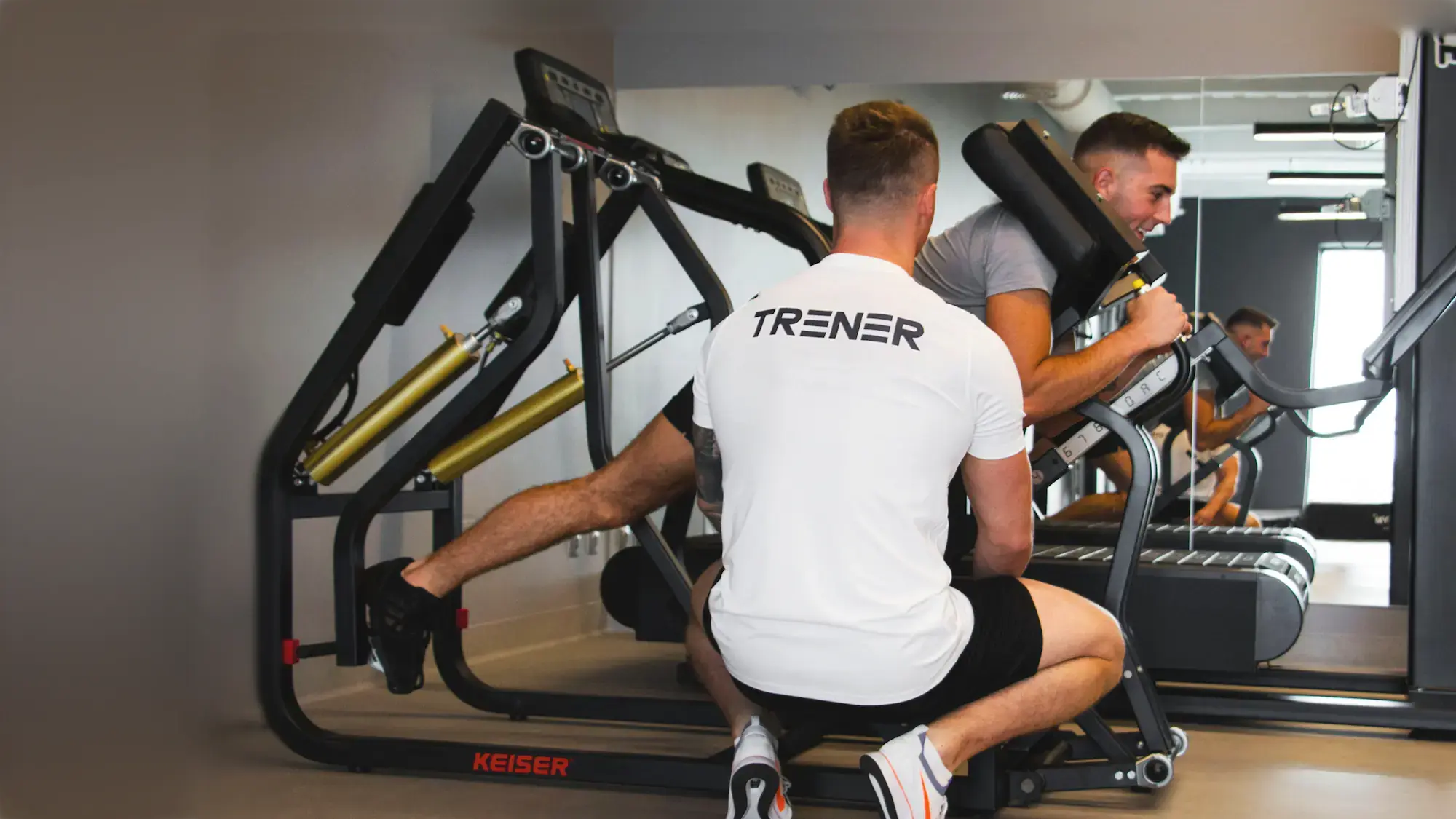
At Teho Sport a good entry point is personal training — a coach sets a safe starting level — or small-group MiniGroups, where the group itself enforces consistency. Or simply come back calmly to the gym and hold to the 50% rule.
Sources and evidence base
- Literature on detraining and training reversibility (loss and regain of adaptations)
- The principle of gradual load progression in overuse-injury prevention
- WHO physical-activity recommendations for adults (2020, current in 2026)