Physiotherapy and strength & conditioning
Tennis elbow – symptoms, treatment and exercises through the eyes of a physiotherapist and a coach
You lift a cup of coffee and feel a stab on the outside of your elbow. The pain comes back when you shake hands, drive a screw or use a mouse after eight hours of work. You may not have held a racquet in years, and still you hear the diagnosis: tennis elbow.
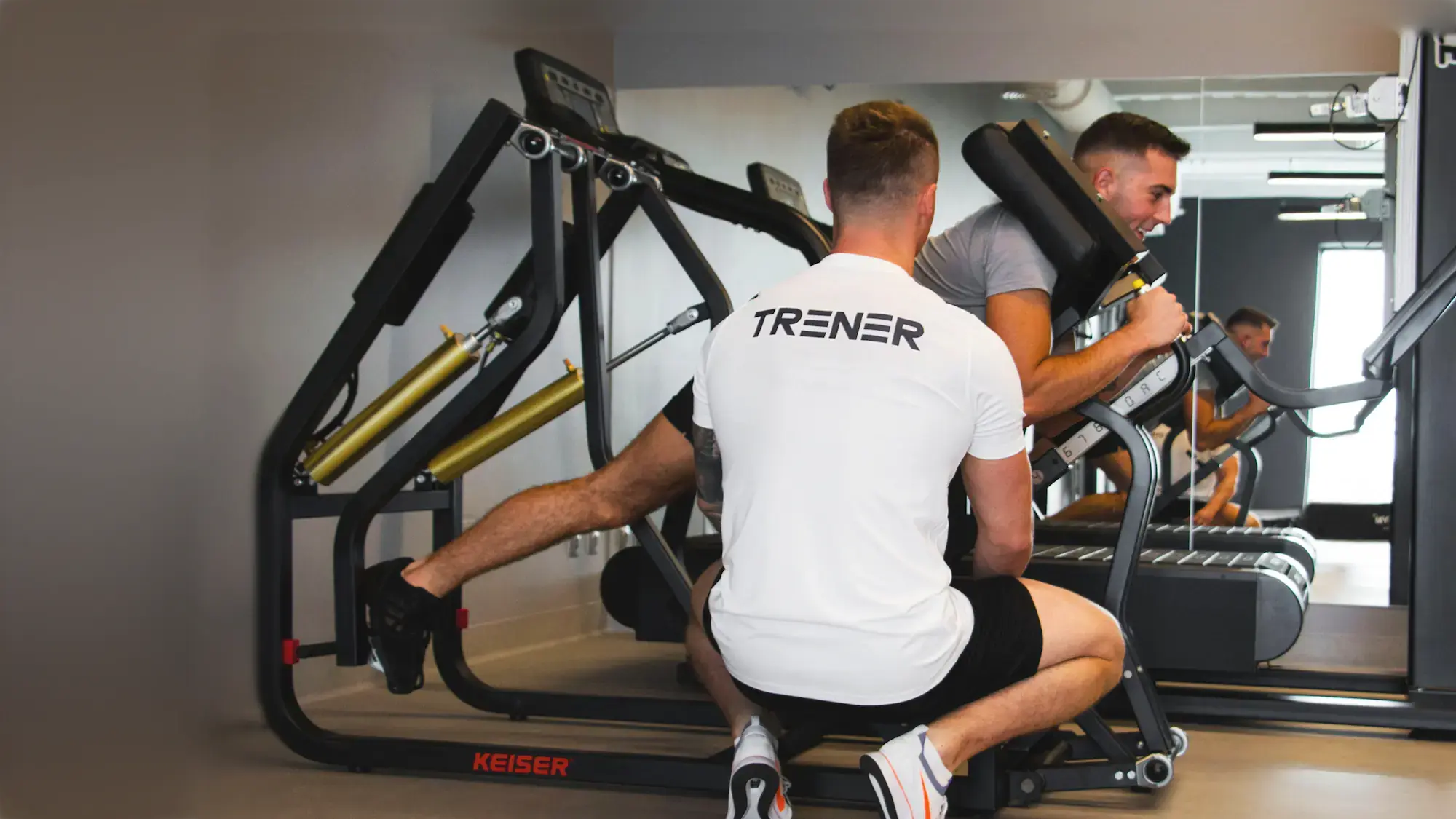
Authors: Sebastian Oleszko, physiotherapist · Szymon Mróz, health and functional trainer
This complaint turns up in offices, workshops and kitchens far more often than on courts. Physiotherapist Sebastian Oleszko, who runs the assessment and treatment of elbow overload at Teho Sport, and strength and conditioning coach Szymon Mróz explain where it comes from, how to recognise it, what really works according to research, and how one change of grip takes the load off the elbow every day.
Contents
What is tennis elbow?
On the outside of the elbow, on a bony bump, attach the muscles that extend the wrist and fingers. Tennis elbow is an overload of that attachment. In medical records you will also meet the names lateral epicondylitis, extensor enthesopathy or lateral elbow tendinopathy. They all mean the same thing. The name is historical: the condition was first described in tennis players, but today most people with this diagnosis never hold a racquet at all.
The word “inflammation” is misleading. According to the 2022 JOSPT clinical practice guideline, drawn up by the American physiotherapy academies, the pain has three components: changes in the structure of the tendon, poorer motor control and a nervous system that has become more sensitive to pain. That is why an anti-inflammatory tablet alone rarely solves the problem.
Why does it hurt during ordinary gripping? When you squeeze an object, the muscles that flex the fingers pull the wrist down. The extensors have to counteract that so the wrist stays straight. They then work isometrically, tensing without movement in the joint, like when you hold a bag. Every handshake, steering wheel or shopping bag is that kind of work. Thousands of repetitions a day are enough for the tendon to start signalling overload.
Symptoms of tennis elbow
- pain on the outside of the elbow, which may run down the forearm,
- pain when gripping, lifting, shaking hands and opening a jar,
- a weaker grip, so a mug or a briefcase suddenly “weighs more”,
- pain on pressing the bony bump on the side of the elbow,
- stiffness in the morning or after a long period without movement.
When to see a specialist urgently: if your fingers go numb, the pain wakes you at night, the elbow is swollen, or the pain appeared after a fall or an injury. These can be signs of a different problem.
Causes, and who gets it
In a Finnish study of almost 5,000 people aged 30–64, tennis elbow was found in 1.3% of participants. Women and men were affected equally often. Both current and past smoking raised the risk.
The main risk factors are repetitive wrist movements, forceful work, awkward hand positions and vibration transmitted to the hand, for instance from power tools. If you are 35+ and work with your hands, this topic concerns you directly. Playing tennis, squash or padel is not a problem in itself: regular play strengthens the grip and the forearm, and what overloads the elbow is faulty technique and a lack of strength preparation. Good technique and a strong forearm are the best protection.
How is tennis elbow diagnosed?
The diagnosis is made from the history and an examination of the arm. The physiotherapist performs simple tests that load the painful attachment:
- Cozen's test: you extend the wrist while the therapist resists,
- Mill's test: the therapist stretches the extensor muscles with the elbow straight,
- Maudsley's test: you extend the middle finger against resistance.
If each of them brings on the familiar pain on the side of the elbow, the diagnosis is almost certain. The therapist also measures pain-free grip strength, that is how hard you can squeeze before pain appears. It is a good measure of progress.
Just as important is ruling out other causes: compression of the radial nerve in the forearm, irritated nerves in the cervical spine, and problems in the elbow joint itself. Pain from the neck can mimic tennis elbow, and then elbow exercises will not help.
What about ultrasound? Most studies find no link between how the tendon looks on the image and how much it hurts. The exceptions are larger tears and damage to the lateral ligament of the elbow, which come with a worse prognosis. So ultrasound is useful when the symptoms are atypical or treatment is not working, not as a starting point for everyone.
Palm up: the grip change that unloads the elbow
When you grip an object with the palm facing down, the way you pick a bag up off the floor, much of the weight is held by the extensors, the muscles that hurt. When you turn the palm up, like a waiter carrying a tray, more of the work is taken over by the biceps and the wrist flexors. Anatomically the first position is called pronation, the second supination. Reviews of conservative treatment describe lifting in supination as part of offloading, and the JOSPT guideline recommends changing everyday habits as a standing part of therapy.
In practice it looks like this:
- bag, bucket, kettle: grip from underneath or carry on the forearm, close to the body,
- mug, pot, box: lift with both hands, palms underneath,
- desk: a vertical mouse, or a hand position with the thumb up, usually irritates less than a flat palm,
- gym: while it hurts, choose an underhand or neutral grip.
Changing the grip gives the tendon some peace, but it will not replace the exercises that teach it to tolerate load. You need both.
Treating tennis elbow – what the research says
Exercise is the foundation. A 2024 meta-analysis published in the Journal of Hand Surgery pooled trials comparing different methods with placebo. Over 6 weeks to 6 months, physiotherapy and exercise came out ahead. The authors note honestly that there were few trials. The core of management is exercise, education and mobilisation, that is manual techniques that improve joint movement.
The tendon needs load, not rest alone. In a Danish study by Couppé et al. (2022), 60 people trained at home with resistance bands using the HSR method for 12 weeks. HSR means slow repetitions against heavy resistance that gradually strengthen the tendon. Participants in every group improved. Adding a corticosteroid injection or tendon needling gave no advantage over the training alone.
Steroids: quick relief, a worse year. In a study from the journal JAMA, a corticosteroid injection reduced pain faster in the first weeks. After a year, however, 83% of people reported improvement after the steroid versus 96% after an injection without the drug, and the pain came back in 54% versus 12%. The steroid quiets the pain but does not rebuild the tendon's resilience. The decision about an injection should always be discussed with a doctor.
How long does it take? A typical episode lasts 6 to 24 months. In the study by Smidt et al. (Lancet 2002), after a year improvement was reported by 91% of people after physiotherapy, 83% of people who waited without treatment, and 69% of people after corticosteroid injections.
Exercises for tennis elbow
The dose, the load and the order are set by the physiotherapist after an assessment. Below are the three pillars a programme usually rests on:
1. Tensing without movement (isometrics). Forearm resting on the thigh or a table, palm down. You hold the wrist still against the resistance of a band or your other hand for several tens of seconds. For some people, at the right intensity, it helps reduce pain early in therapy.
2. Slow lowering (eccentrics). The other hand helps lift the wrist with a light dumbbell, and you lower the weight slowly, over 3–4 seconds.
3. Heavy resistance training (HSR). Slow, heavy repetitions with a band or a dumbbell, increasing the resistance gradually from week to week.
The pain rule: moderate pain during exercise is acceptable if it returns to baseline by the next day. If it builds from day to day, reduce the load. This model comes from research on the Achilles tendon and is applied to other tendons as well.
How we work at Teho Sport
Physiotherapist Sebastian Oleszko starts by establishing whether it really is tennis elbow. He rules out other causes of the pain, including those from the cervical spine, because in his practice some people with an “elbow” have a problem somewhere else entirely. He measures pain-free grip strength, teaches the grip change at work and at home, and then selects manual therapy and the first exercises, which reduce pain without taking the arm out of action. That is how medical training at Teho Sport begins.
Strength and conditioning coach Szymon Mróz takes over building tissue resilience. He matches the methods to which structure is meant to work and what task it has to perform:
- tensing without movement for the extensors, because that is how they work when you grip,
- HSR and slow lowering for a tendon that needs heavy, controlled loading,
- plyometrics, that is jumps, throws and fast loads, before a return to the court or to physical work.
For people who play tennis, squash or padel, the strength and conditioning coach also looks at stroke technique, because an experienced player transfers less shock to the elbow than someone who “saves” shots with the wrist alone. The goal is not to limit play but to return to the court with better technique and a stronger grip.
Teho Sport's physiotherapists and coaches work in one building, on shared data. The transition from therapy to strength and conditioning training happens with no gap in which a relapse is easy. You do not tell your story all over again.
Why build strength after 30? A tendon without a stimulus weakens, while everyday loads stay the same. The shopping bag weighs as much as ever, and the child in your arms keeps growing. A strong grip and tendons that tolerate load are what let you work, play and carry without pain for decades to come. We described the same principle in Calf training — a fad or the foundation of fitness?
FAQ
Will tennis elbow go away on its own? For most people yes, but it often takes six months to two years and likes to come back. Physiotherapy and strength and conditioning training shorten that time.
Can I go to the gym with tennis elbow? Yes, and it is even worth doing. Switch to an underhand or neutral grip and choose a weight so that the pain does not build the next day.
Does a tennis elbow brace help? It can reduce pain for a few weeks, but it does not rebuild the tendon's resilience. Exercises do that.
Steroid injection or physiotherapy? The steroid works faster, but after a year the results are worse and relapses more frequent. Discuss the decision with a doctor.
How does tennis elbow differ from golfer's elbow? Tennis elbow hurts on the outside (the wrist extensors), golfer's elbow on the inside (the wrist flexors).
Does your elbow hurt when you grip? Book a consultation at Teho Sport in Trzebownisko near Rzeszów: +48 513 093 320. We will start with a thorough assessment and guide you from therapy to full fitness.
The content of this article is educational and does not replace a consultation with a doctor or physiotherapist. If the pain radiates, comes with numbness in the fingers, or appeared after an injury, consult a specialist before starting exercises.
Sources and evidence base
- Lucado AM et al. Lateral Elbow Pain and Muscle Function Impairments: Clinical Practice Guidelines. JOSPT 2022;52(12):CPG1–CPG111
- Lowdon H et al. Comparison of Interventions for Lateral Elbow Tendinopathy: Network Meta-Analysis. J Hand Surg Am 2024;49(7):639–648
- Couppé C et al. Heavy Slow Resistance Training Combined With Corticosteroid Injections or Tendon Needling in Lateral Elbow Tendinopathy. Am J Sports Med 2022;50(10):2787–2796
- Coombes BK et al. Effect of corticosteroid injection, physiotherapy, or both in unilateral lateral epicondylalgia: RCT. JAMA 2013;309(5):461–469
- Smidt N et al. Corticosteroid injections, physiotherapy, or a wait-and-see policy for lateral epicondylitis: RCT. Lancet 2002;359:657–662
- Shiri R et al. Prevalence and determinants of lateral and medial epicondylitis: a population study. Am J Epidemiol 2006;164(11):1065–1074
- Clarke AW et al. Lateral elbow tendinopathy: correlation of ultrasound findings with pain and functional disability. Am J Sports Med 2010;38(6):1209–1214
- Shahabi S et al. The effects of counterforce brace on pain in lateral elbow tendinopathy: systematic review and meta-analysis. Prosthet Orthot Int 2020;44(5):341–354
- Truong BQ et al. Non-operative Management Strategies for Lateral Epicondylitis: A Comprehensive Literature Review. J Am Osteopath Acad Orthop 2025;9(3)
- Silbernagel KG et al. Continued sports activity, using a pain-monitoring model, during rehabilitation in patients with Achilles tendinopathy: RCT. Am J Sports Med 2007;35(6):897–906