Physiotherapy and strength & conditioning
Calf training — a fad or the foundation of fitness? A physiotherapist and a strength coach answer
Calves are associated with aesthetics and gym slogans like “never skip calf day”. Yet they are one of the most important muscle groups for health after 30 — and one of the most neglected.
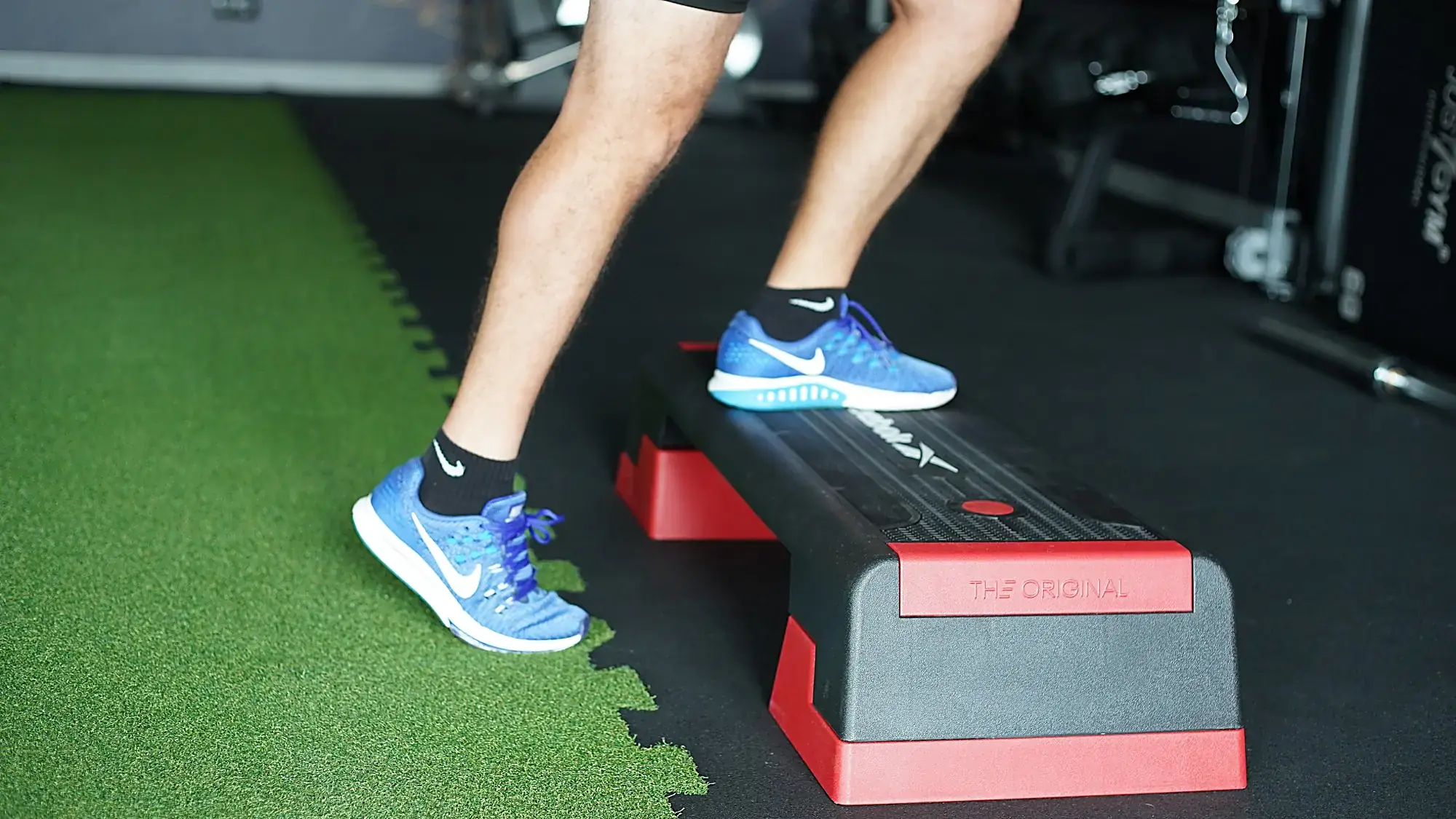
In this article physiotherapist Sebastian Oleszko and strength and conditioning coach Michał Bereś of Teho Sport explain what your calf muscles do for your circulation, joints and everyday fitness, what the latest research says about them, and whether the classic calf raise really makes sense.
Calves are not a fad. They are your “second heart”
The calf muscles — the gastrocnemius and the soleus — work with every step, every flight of stairs and every time you stand up from a chair. But they also serve a function few people remember: they act as a pump that pushes venous blood from the legs back up to the heart. Cardiologists call this mechanism the calf muscle pump, and the calf itself the “second heart”. That is not a marketing metaphor but a term used in the medical literature.
What does that mean in practice?
- Circulation and the heart. An efficient calf pump supports venous return, relieves the cardiovascular system and reduces the feeling of heavy, swollen legs after a whole day of sitting or standing.
- Joint stabilisation. The calf works together with the foot and the knee to cushion every step. Studies in people with knee osteoarthritis show that weakened calves go hand in hand with pain and poorer joint function.
- Gait and balance. The calf muscles generate the push-off force in the propulsion phase. Weak calves mean a shorter, slower stride and a higher risk of tripping.
- Protection against sarcopenia. Plantar-flexor strength (that is, calf strength) is now being studied as one of the markers of age-related muscle loss and fall risk.
After 30 we naturally start losing muscle mass — without resistance training an estimated 3–8% per decade, and the process speeds up after fifty (we wrote more about it in strength you will use for years). The calves, as muscles that work mainly posturally, are particularly vulnerable to this loss, especially with a sedentary lifestyle.
What the latest research says
Recent years have brought a series of publications that pulled the calves out of the shadows:
- The calf pump and lifespan. A team of cardiologists at the Mayo Clinic (Dr Robert McBane) analysed calf muscle pump function in a large group of patients. The conclusion: the efficiency of this pump was associated with the risk of death over 10 years — people with normal pump function had a markedly lower risk than those with a weakened pump. The authors explicitly recommend calf strength training as part of cardiovascular prevention (overview in BBC Science Focus).
- The soleus and blood sugar. A widely discussed study published in iScience (2022) showed that the soleus — the deep layer of the calf — can sustain a high oxidative metabolism for hours without fatigue and genuinely improve glucose regulation, even in untrained people. That is one reason regular calf activation is now being studied in the prevention of insulin resistance.
- Calf strength, falls and sarcopenia. Ongoing clinical trials (including the STRIDE project, 2026) use plantar-flexor strength to identify people at risk of sarcopenia and falls. Calf strength turns out to be a sensitive indicator of how well we walk and how steadily we stand.
- Calves and knees. Patients with knee osteoarthritis show significant calf weakness and atrophy, and programmes that combine quadriceps and calf strengthening improve gait and reduce symptoms.
The conclusion is consistent: strong calves are not about looks but a measurable health parameter — of circulation, metabolism and physical function.
Why do you need strong calves? Specifics for women and men 30+
If you work at a desk — 8 hours of sitting a day is 8 hours in which your calf pump barely works. You know the result: heavy legs in the evening, swelling around the ankles, a feeling of “stiffness”. Strengthened, regularly activated calves genuinely change that.
For women there is an extra dimension. Working in heels functionally shortens the gastrocnemius and the Achilles tendon — hence the frequent tightness and cramps. Around the menopause, falling oestrogen accelerates the loss of muscle mass and bone density, and resistance training (calves included) is today one of the best-documented forms of preventing osteoporosis and falls — one of the pillars of our health training 40+. Strong calves also mean a steadier gait, a better silhouette and legs that don't “give up” on a hike or after a whole day on your feet.
For men the calves are often the weakest link — genetically resistant to growth and notoriously skipped in the training plan. Yet they are what limits performance in running, team sports and skiing, and their weakness raises the risk of a calf tear or Achilles problems — one of the most common injuries among active men over 35.
If you run or plan to start — when running, the calf and the Achilles tendon carry loads of several times your body weight. Without adequate strength that ends in Achilles tendinopathy, shin splints or an overloaded plantar fascia. A strong calf is a runner's cheapest insurance policy — which is why it is a fixed element of our athlete training and of returning to sport after an injury.
If you think about the future — the ease with which you will climb the stairs in 20–30 years is built today. The muscle mass and strength you accumulate between 30 and 50 is capital your body will draw on for the rest of your life.
Do calf raises make sense? A physiotherapist's and a strength coach's view
The short answer: yes — provided you do them well. The calf raise is one of the basic tools in physiotherapy: it is used in Achilles tendon rehabilitation, after ankle sprains and in work on foot stability. The problem is that in the gym this exercise is most often done badly.
The physiotherapist's view — Sebastian Oleszko. The calf is two different muscles with different jobs. The gastrocnemius works harder with a straight knee (standing calf raises), the soleus with a bent one (seated calf raises). If you do only one variant, you train half the calf. The full range of motion matters too: a deep heel drop below the level of the toes, and a controlled eccentric phase, which builds the resilience of the Achilles tendon. Fast “bouncing” on a machine with a heavy load is the tendon working as a spring, not the muscle.
The strength coach's view — Michał Bereś. The calves are endurance muscles — every day they perform thousands of low-intensity repetitions, so they respond to training only when the stimulus is large enough. Research confirms they grow more slowly than, say, the thigh muscles and need consistency and progressive loading — but they do grow, and they build strength even with moderate-intensity training (Gavanda et al., “Are calves trainable?”, 2024). For an athlete, dynamic work is key as well: hops, skips and plyometric drills that teach the calf to return energy at push-off.
So: calf raises are not a marketing slogan but a foundation. The marketing slogan is the promise that results will come without a plan, technique and progression.
Physiotherapist or coach? At Teho Sport you don't have to choose
It is one of the most common questions from our members. The answer depends on your starting point:
- Training with physiotherapist Sebastian Oleszko — choose this path if you have had an injury (Achilles, ankle, knee), feel pain when walking or running, get cramps and swollen legs, or are returning to activity after a longer break. At Teho Sport the physiotherapist doesn't stop at rehabilitation — they run your medical training themselves: from assessing ankle mobility and how the foot works, through the first exercises, to full loading.
- Training with strength and conditioning coach Michał Bereś — if you are healthy and want results: more strength, a better physique, faster running, confident landings in sport. The strength and conditioning coach will set the volume, load and progression — exactly what people training on their own lack most.
At Teho Sport these skills overlap: the physiotherapists run strength and conditioning sessions, and the coaches work with the physiotherapists every day and consult them about their clients. Whoever you start with, you follow one coherent plan — no guesswork and no gaps in which you lose the results you've built. Your programme is based on a functional assessment, not on a one-size-fits-all template from the internet.
Where to start? Book a consultation at Teho Sport. We will check how your calves, feet and ankles work and propose a path matched to your goal — whether you want to get rid of heavy legs after work, return to running or finally see the results of personal training. Your “second heart” deserves the same level of care as the first.
Important notice
The content of this article is for educational and informational purposes only — it is not medical advice and does not replace a consultation with a doctor or physiotherapist. If you are in pain, have a diagnosed cardiovascular condition, diabetes or osteoporosis, or are returning to activity after an injury, consult a specialist before starting training. The Teho Sport team will gladly help you choose a plan that is safe for your health and goals.
Sources and evidence base
- McBane R. et al., Mayo Clinic — calf muscle pump function and mortality risk (overview: BBC Science Focus)
- Hamilton M. et al., iScience 2022 — soleus metabolism and glucose regulation (overview)
- STRIDE — plantar-flexor strength, sarcopenia and falls, ClinicalTrials.gov 2026
- Quadriceps and calf strengthening programme in knee osteoarthritis, ClinicalTrials.gov
- Gavanda S. et al., “Are calves trainable?”, Translational Exercise Biomedicine 2024