Squash
Squash: 45 minutes that gives you more than you'd think
Squash sells itself: half an hour on court can leave you more tired than an hour in the gym — and a lot more entertained.
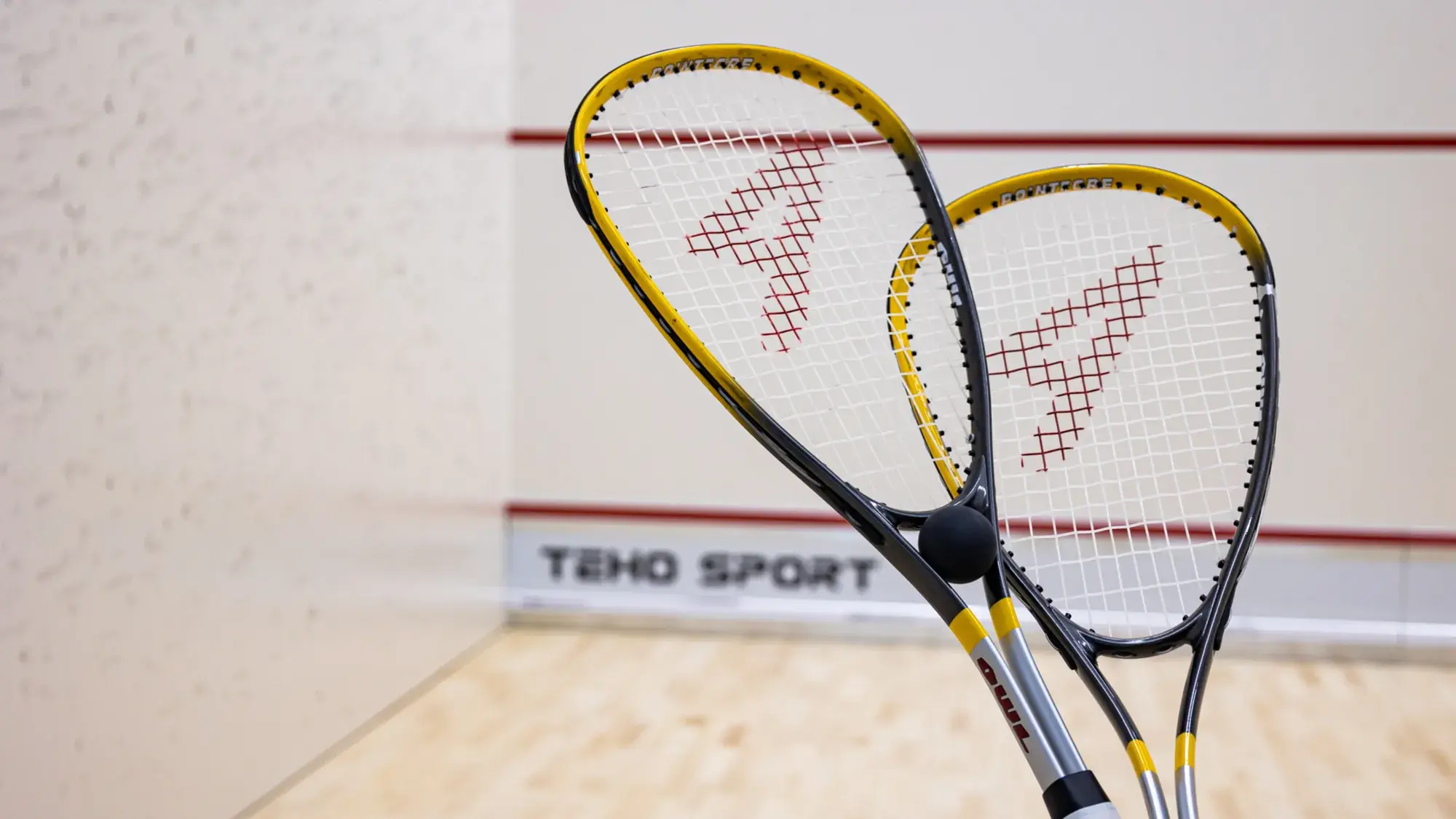
Squash regularly tops the "most demanding sports" lists. The reason is the density of effort: in a small enclosed space the ball barely slows down, so there is almost no rest. The body works in intervals, the heart rate stays high, and the time flies by.
How much you really burn
Energy-cost estimates for squash are among the highest of any indoor sport — figures on the order of several hundred calories over 45–60 minutes of vigorous play are commonly cited, depending on body mass and pace. Even treating such numbers cautiously, the nature of the game — constant movement, accelerations, braking — makes it very time-efficient.
On top of that comes what the numbers don't show: work on agility, reflexes and footwork you won't build running in a straight line.
Why squash is so addictive
Squash has a short entry curve: the first rallies work almost immediately, and the satisfaction of a well-struck ball is instant. It's a sport where competition drives the effort — you play hard because you want the point, not because a training plan tells you to.
How to start safely
- Warm up before stepping on court — sudden turns on cold muscles are the most common cause of squash injuries.
- Protective eyewear is a must — the ball is hard and fast; this isn't overkill, it's the standard.
- Begin with easy rallies before you play for points — striking and movement technique will save your knees.
- Indoor shoes with good grip — sudden braking matters on the court floor, not running cushioning.
At Teho Sport you can play on four squash courts, and if you catch the bug — join the Rzeszów Squash League and test your form against regular opponents.
Sources and evidence base
- Energy-cost comparisons of sports (MET compendium-type references)
- Squash federation material on playing safety and eye protection
- WHO physical-activity recommendations for adults (2020, current in 2026)